Sound and practice · ZUDEN Singing Bowl Library
Why Does a Singing Bowl Stop While Rubbing? Check Speed, Pressure and Angle
A broken rubbing tone does not automatically mean a poor bowl. Stabilise support, then test speed, pressure, angle and contact one variable at a time.
Short answer: The most common problem is not too little strength. It is that speed, pressure and angle change together. Slow down, keep each circle similar and maintain continuous contact before adding force.
Stabilise the bowl and the supporting hand
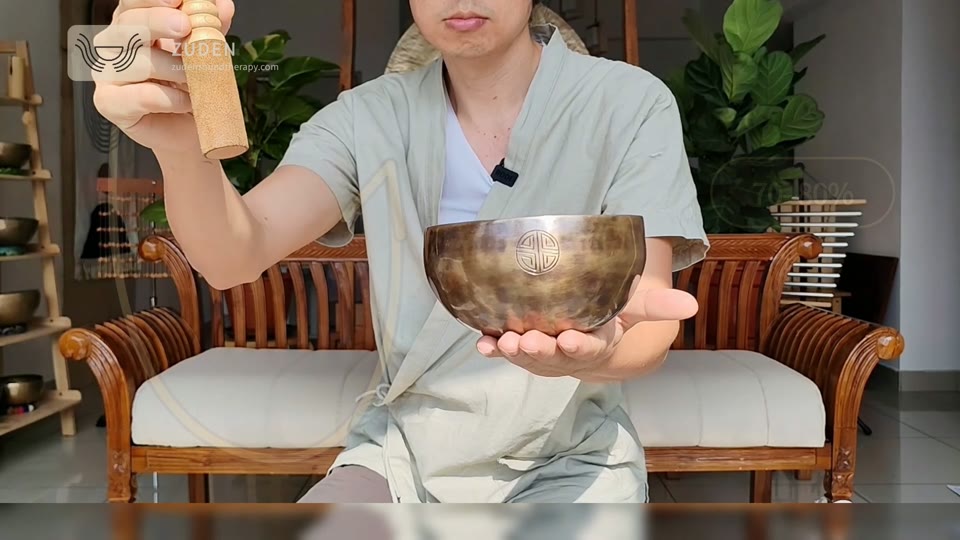
Place the bowl on a stable soft pad or an open palm. Keep fingers away from the vibrating wall. If the support keeps moving, even a controlled rubbing hand will lose continuity.
Choose a speed you can control
Beginners often accelerate when the tone begins to fade, which can create chatter. Try one circle in roughly two to three seconds. Build continuity first, then explore the speed that suits that bowl.
Pressure should be continuous, not forced
Too little pressure loses friction; too much can stall the movement or produce a rough sound. Begin with moderate contact and make small adjustments while the wrist remains free.
Keep the contact angle consistent
A mallet that becomes much flatter or steeper changes the contact area. There is no single angle for every bowl, but the wrist should not keep wandering during one comparison.
Change one variable per round
Keep angle fixed and alter speed, then keep speed fixed and alter pressure. A twenty-second recording can reveal where the tone breaks more clearly than changing everything at once.
A practice you can try now
- Fix the bowl and body position.
- Rub for twenty seconds at two to three seconds per circle.
- Change speed only and count interruptions.
- In the next round change pressure only.
Safety and boundaries
Stop when the wrist, fingers or shoulder hurt. Rubbing is not completed by enduring pain. Reduce force and distance when the sound becomes abrasive.
Frequently asked questions
May I strike the bowl before rubbing?
Yes, but distinguish the starting strike from the rubbing phase when reviewing a recording.
Does faster always mean louder?
No. Excessive speed can reduce stable contact.
Does repeated stopping mean the bowl is damaged?
Check support, mallet material, speed, pressure and angle first.