This article shares a body-mind and chakra perspective for self-awareness, not medical advice.
As children, many of us trusted more easily. We laughed when happy, cried when sad, and reached out without calculating too much. As adults, we learn to protect ourselves. We become careful. We avoid being hurt. We keep parts of the heart guarded.
Protection can be necessary. But when protection becomes the only way we relate to life, the heart can become tired.
The heart chakra as connection
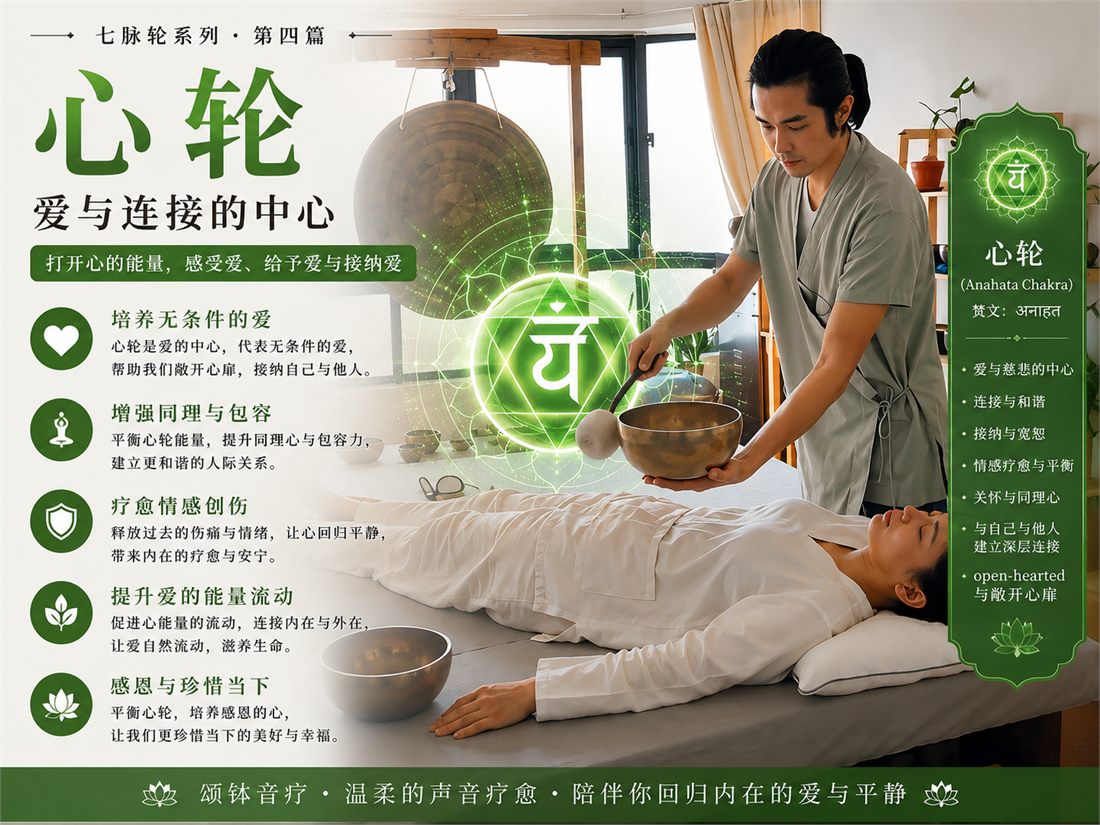
In the chakra system, the heart chakra is associated with love, compassion, trust, and the ability to connect with ourselves and others. It is not only romantic love. It is the felt sense of being able to meet life without closing completely.
When this area feels guarded, a person may still function well, smile, work, and care for others. Yet inside, there may be distance, numbness, or a fear of truly receiving.
Opening does not mean having no boundaries
A healthy heart is not a heart without boundaries. True compassion does not mean saying yes to everything. It means we can remain soft without abandoning ourselves.
Sound practice can support this by giving the body a gentle experience of safety. The tone of a singing bowl does not demand anything from us. It simply appears, resonates, fades, and leaves space.
Listening to the guarded heart
During meditative listening, notice whether the chest area feels tight, heavy, warm, open, or distant. There is no need to judge. The body often tells the truth more gently than the mind.
ZUDEN practice invites a stable kind of softness: not dramatic emotional release, but a return to presence. Little by little, the heart learns that protection and openness can coexist.
A simple practice
Listen to one soft bowl tone. Place a hand lightly on the chest. Ask: Where have I been protecting myself so strongly that I can no longer receive?
Let the answer be quiet. Sometimes the first step is not to open fully, but to stop fighting the part of us that is afraid.