Many people imagine singing bowls as something magical. Yet in ZUDEN's approach, the sound itself is not the whole answer. Sound can open a door, but the way we live after the session still matters.
Note: This article is adapted from ZUDEN spoken sharing and expanded into written form. It is offered for reflection and self-care, not as medical advice or treatment.
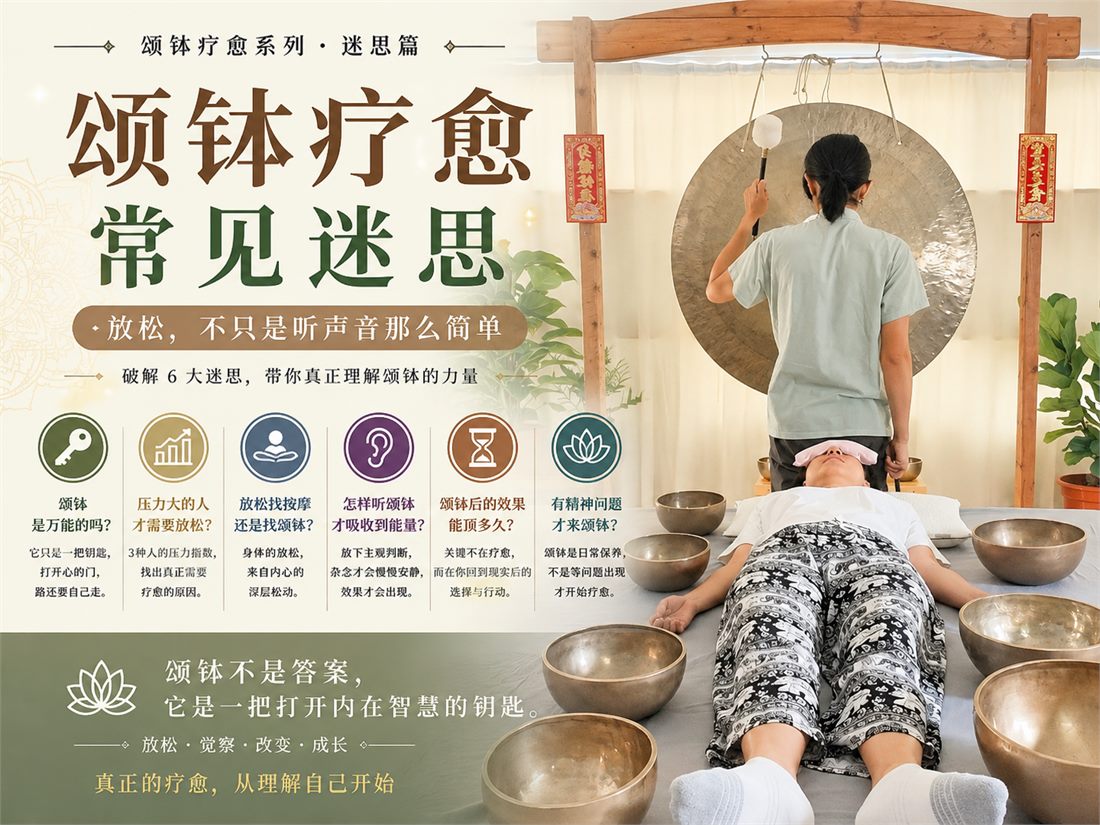
Myth 1: Are singing bowls a solution for everything?
No. Singing bowls are not a cure-all. They are more like a key.
They may help us:
✓ slow down
✓ settle the body and mind
✓ pause repetitive thoughts
✓ notice ourselves more clearly
But after a key opens the door, we still have to walk the path ourselves. Sound can create a pause. The deeper shift often comes from awareness, choices, and the way we return to life.
Myth 2: Only very stressed people need relaxation
In real sessions, something interesting often appears: the people who say, "I am very stressed," are not always the ones with the highest tension. Sometimes the people who say, "I am fine, I have no stress," are the ones whose bodies feel the most held, guarded, or overloaded.
Pressure is not always obvious. Some people can keep working, smiling, and moving through life while their nervous system is quietly carrying a lot.
Relaxation is not only for people who are close to breaking down. It is a way of maintaining inner steadiness before the body has to speak louder.
Myth 3: Should I choose massage or singing bowls?
If the main issue is physical soreness, massage may be helpful. But when the heart feels tired, the mind keeps running, or the body cannot fully let go, the question may not be purely muscular.
During a singing bowl session, some people begin with clenched hands, tight shoulders, or tension around the eyes. As the sound continues, the body may soften. The hands may open. Sometimes emotions arise.
This does not mean the bowl is "fixing" the person. It may simply create a safe, gentle space where the body remembers how to release.
Myth 4: How should I listen for the best effect?
Many people try to analyze the sound: this tone is longer, that bowl sounds better, this frequency feels special. There is nothing wrong with noticing sound quality, but if the mind is too busy analyzing, it may be harder to settle.
In ZUDEN's view, one purpose of singing bowl practice is not to think more, but to temporarily stop overthinking.
Rather than asking, "Is this the correct sound?", we can gently ask, "Can I listen without needing to control everything?"
Myth 5: How long does the effect last?
People often ask, "After a session, how long will the effect stay?" The honest answer is: it depends on how we live afterward.
If we return immediately to late nights, emotional overload, alcohol, overwork, or the same patterns without any change, the body may quickly move back to its old rhythm.
A singing bowl session can feel like a pause button. It gives us space to reorganize. But the lasting change is usually supported by daily choices.
Myth 6: Are singing bowls only for people with serious emotional problems?
No. Singing bowl practice does not have to wait until life becomes unbearable.
It is similar to movement, meditation, or quiet breathing. We do not need to wait until the body collapses before caring for it. We do not need to wait until the mind is overwhelmed before learning how to pause.
Used gently, singing bowls can become part of emotional maintenance, body-mind reflection, and restorative self-care.
The deeper point is not the sound alone
Many people think healing means: listen once, and everything becomes better. ZUDEN sees it differently.
Sound may help us soften. It may help us notice. It may help us return to ourselves. But the deeper work is awareness, perspective, habits, and the willingness to begin again.
A singing bowl is not the answer. It is more like a key. Once the door opens, the next steps are still ours.
ZUDEN Singing Bowl Healing